
Mental Health Education
for Secondary Schools and Colleges
Supporting pupils, staff and parents to better understand mental health, build resilience, and feel more confident in knowing when and how to seek support.
Our therapist-led mental health awareness workshops create a safe, engaging space where young people can explore real-life challenges and learn practical ways to manage them.
Curriculum-aligned PSHE lessons
Staff training
Parent information workshops
Suitable for mainstream schools, alternative provisions and pupil referral units

Helping schools to deliver wellbeing with confidence
We know that PSHE leads and school leaders are balancing a full timetable, with increasing expectations around mental health education.
Topics need to be handled with care. Content needs to be appropriate. And students need more than just information – they need tools they can actually use.
Our sessions are designed to support schools with this responsibility, offering curriculum-aligned lessons that are both practical and engaging.
CORE SESSION FOR PUPILS
Mental Health and Wellbeing Awareness
A structured, interactive lesson that helps pupils make sense of their mental health in a way that feels accessible, relevant and real.

Duration
45-120 minutes.
Flexible to suit your
timetable and priorities.

Class Sizes
6-30 pupils.
Class, year group or
whole-school approach.

Audience
Key Stages 3 & 4.
Ideal for exam season
prep in Years 9–11.
What the session covers
-
What mental health is, and how it’s something we all experience in different ways.
-
How stress can build over time, and how it can affect thoughts, feelings and behaviour.
-
Recognising emotions and early signs that something might not feel quite right.
-
The impact of friendships, social media and everyday pressures.
-
How to seek support for themselves or others, and why this matters.
Practical tools students can try
Students are introduced to simple, realistic strategies they can explore in a way that feels comfortable for them:
-
The stress bucket activity to understand how pressure can build.
-
Breathing techniques such as box breathing to support regulation in the moment.
-
Grounding and mindfulness exercises to help bring attention back to the presen.t
-
Gentle strategies for managing anxious or overwhelming moments.
BOLT ON SESSIONS
Additional PSHE Topics
Alongside the core session, we offer additional lessons that can be tailored to suit your pupils and year groups.
1
Body Image and
Self-Esteem
Addressing body image concerns, self-esteem issues, and social media’s impact on body perception.
2
Emotional
Regulation
Developing an understanding
of emotional triggers and learning strategies to manage and respond to emotions effectively.
3
Building
Resilience
Building the skills to
bounce back from setbacks and cope with challenges.
4
Managing Exam Stress and Transitions
Understanding how exams and life changes can affect wellbeing, and exploring practical strategies to staycalm, focused, and resilient.
5
Managing
Anxiety
Recognising signs of stress and anxiety and learning simple strategies to manage them.
6
Your School, Your Programme
Mix and match sessions to build a programme that feels right for your school.
All sessions are adapted to suit the age, setting and needs of each group, including mainstream schools and alternative provision such as pupil referral units.
What Students Said


Designed with schools in mind
Our sessions support schools to meet key outcomes from the Department for Education guidance, helping pupils to:
-
Understand the link between physical and mental wellbeing
-
Talk about emotions with greater confidence and clarity
-
Recognise when something isn’t right
-
Reduce stigma around mental health
-
Seek support from trusted adults
A safe and inclusive environment
-
We take a trauma-informed and student-centred approach.
-
Clear boundaries and safeguarding awareness throughout.
-
Trigger-aware delivery with appropriate content warnings.
-
Inclusive of neurodiversity (including ADHD-friendly approaches).
-
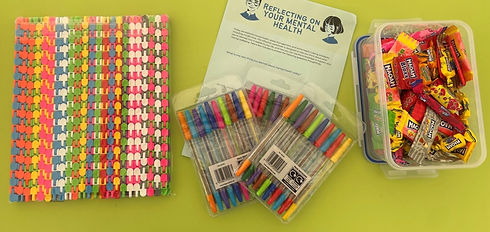
Use of fidget tools and varied activities to support engagement.


Client Review


“Kate has delivered some excellent sessions for our young people on their mental health and well-being delivering to year 8 through to year 13 in a variety of settings, varying the content as appropriate. She has always fully engaged the young people and has innovative ideas for delivery with some hands-on activities. There have been many occasions where young people reflect back to her sessions as making a huge difference to their health and well-being and how the session/s has had a positive impact for them.”
Tracy, Inspiration Programme Manager,
Action4Youth, May 2023
A Crisis We Can’t Ignore

1 in 5 young people experienced a probable mental health disorder in 2023
20.3% of 8-16 year-olds and 23.3% of 17 to 19 year-olds are affected.
1.3 Million Referrals
The highest number of youth mental health referrals on record was seen last school year.

44% of 19 year-olds with mental health disorders have attempted suicide or self-harmed.
Sources: NHS, 2022, National Centre for Social Research, Young Minds
PRICING GUIDE
Transparent pricing. Tailored to your school.
We know every school is different. Our sessions are flexible and designed to fit your needs, your pupils and your budget.

Most schools invest
£450 – £900
Pricing depends on:


Session length
From one-off single period lessons to two-day teacher training
Group size
Tailored to your pupils and staff
The final cost depends on a few key factors, so we can create a package that works for your school.

Number of sessions
Discounts available for multiple bookings

Location
Delivered across the UK on-site and online

We're here to help
We aim to keep our sessions accessible and will always work with you to find an option that fits your needs and your budget.

We 're happy to talk through options, answer any questions and check availability.

Trusted by schools across the UK

Trauma-informed

Making a real difference
Tangible Benefits of Mental Health Education
Mental health and wellbeing education that empowers schools to better support the emotional needs of students and staff. By promoting understanding, early intervention, and healthy coping skills, it helps create a positive school culture where wellbeing is prioritised and everyone feels safe, valued, and ready to learn.

Supports student wellbeing and mental health

Fosters resilience and emotional growth

Reduces disruptive behaviour
Creates a more connected and productive teaching environment

Enhances school reputation as a supportive, forward-thinking institution

Empowers students and teachers to help one another

FREE TO DOWNLOAD
Free mental health resources for schools and young people
Explore practical guides, printable posters and wellbeing tools to help pupils understand their mental health, manage difficult moments and find trusted support.
Created for teachers, pastoral teams, parents, carers and young people.
Kate O’Leary
Kate delivers each session with a warm, person-centred approach, creating a space where pupils, staff and parents feel safe, respected and able to engage in a way that feels right for them.
Drawing on both professional training and lived experience, she uses real-life examples, practical activities and gentle discussion to make mental health feel more understandable and less overwhelming.
Sessions are carefully guided, with sensitive topics handled thoughtfully and appropriate support always signposted. Pupils are never put under pressure to share, but are encouraged to reflect, helping them build confidence, understanding and awareness of where support is available.
When mental wellbeing is part of everyday school life, it becomes easier for everyone to feel seen, heard, and able to thrive.

Related Content


